ATV & Dirt Biking
Overview
Valley County offers hundreds of miles of off-highway riding, ranging from dirt roads to remote single-track. Riding off-road is immense fun and comes with responsibilities. ATVs/UTVs operated on public/state land have very specific restrictions, especially for youth riders.
On public land, operators under the age of 16 must be supervised by an adult (within 300 ft), must wear a helmet, and must have completed an ATV/UTV safety course approved by the Idaho Department of Parks and Recreation. All OHV operators are encouraged to complete an OHV safety education course before operating on public lands, roads, or trails. Online Course Information.
Always know where you are and respect motorized closures. Apps like Avenza, Gaia GPS, and OnX Off-Road show preferred routes, public land boundaries, motorized closure areas, and more, even when you don’t have cell service. Remember that although these online maps aren’t perfect, they go a long way towards helping you avoid trespassing or getting lost in the vast backcountry of Valley County. For questions about specific areas and trails, reach out directly to the land management agency in charge of that area. Recreation staff can help direct you to the right agency.
Fees & Permits
Be familiar with Idaho’s OHV laws and make sure you and your group have correctly registered your off-road vehicles with the Idaho Department of Parks and Recreation. The Valley County Sheriff’s Office takes the enforcement of off-roading laws seriously. You can reach out directly to the Sheriff’s Office with questions about rules and regulations.
Locations
Valley County offers extensive motorized trail opportunities. Many access points are unofficial/undeveloped. Developed parking areas include:
- For a long and easy scenic ride, park at the Lick Creek Trailhead and ride out Lick Creek Road. There are options for loops and exploring spur trails along the way, including non-motorized hiking trails for the whole family.
- The Clear Creek Trailhead is a jumping-off point to Herrick Reservoir, Horsethief Reservoir, Corral Reservoir, and dozens of other motorized loop options. Riding out here is rugged and scenic and includes many miles of two-track and forest roads that access many miles of remote singletrack.
- The backcountry community of Yellow Pine is a great place to start your ride on Warren Wagon Rd (FS 21) east towards Big Creek, or west back towards Ruby Meadows. There are several ATV loop options to visit retired mines and high points, and singletrack trails branching off from FS 21 offer dirt bikers a chance to explore off the beaten path.
- Ruby Meadows Trailhead is a great access point for singletrack riding, and there are several Forest Service campgrounds nearby.
- In the West Mountains, Anderson Creek Snowpark (called West Mountain Snow-Parking Area on some maps) is also a great summer OHV trailhead. Follow Forest Road 435 north towards No Business Saddle and explore numerous side roads along the way.
- It’s worth noting that the Boulder Creek area – accessed from unofficial parking on Boulder Lake Road – is the main access point to Louie Lake and Cruikshank Reservoir, as well as other excellent off-road and singletrack riding. Valley County Parks and Recreation is working to create an official and maintained OHV trailhead.
Know Before You Go
Ten Tips for Responsible and Safe Riding:
- Don’t ride cross-country – stay on established trails. Cross-country travel causes soil erosion, can ignite wildfires, spread noxious weeds, and damage fish and wildlife habitat.
- Always ride in control. Ride within your abilities and your machine’s capabilities.
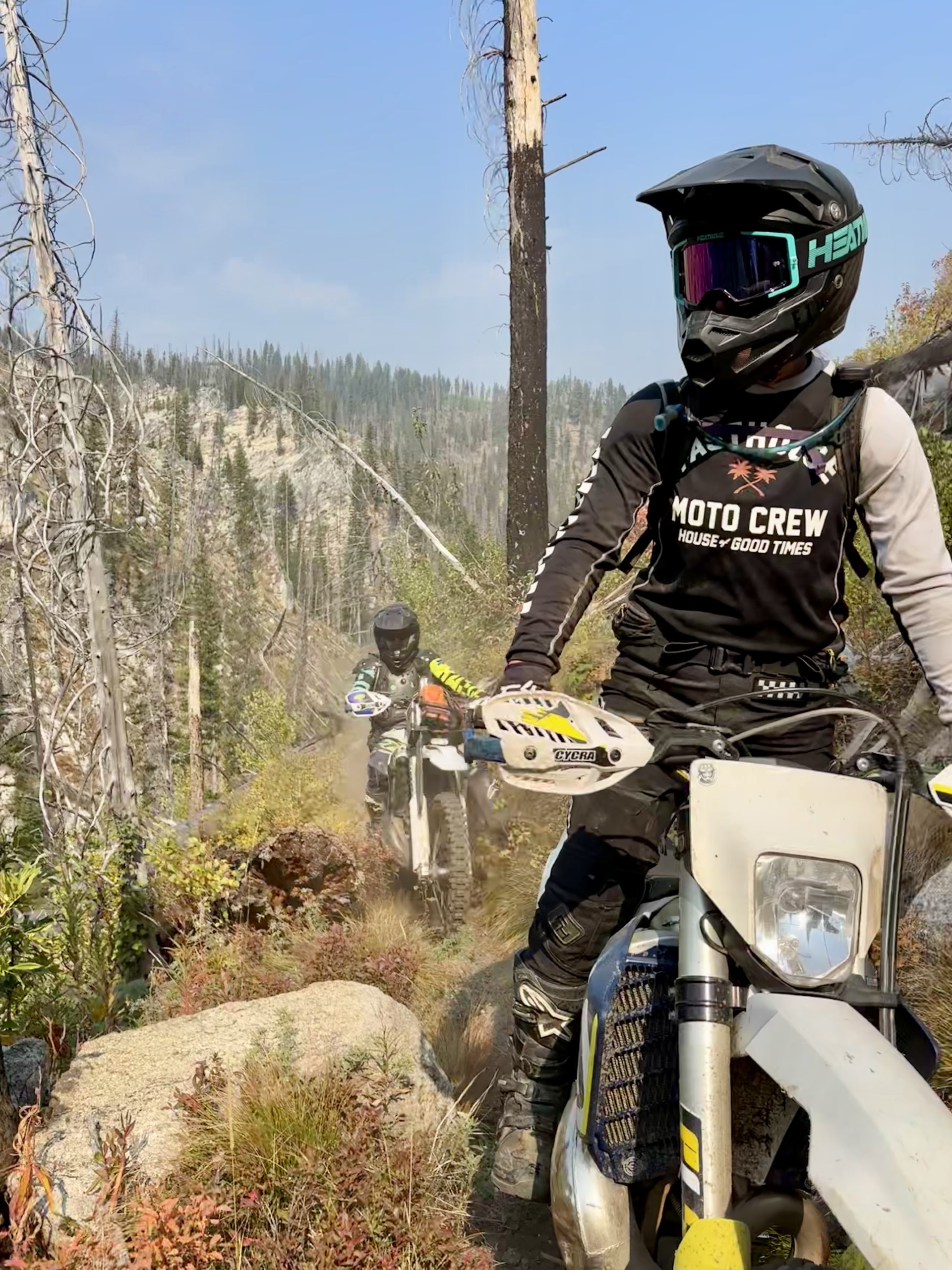
- Always wear the appropriate safety gear. At a minimum, this should include a helmet, shatter resistant eye protection, long sleeves, long pants, gloves, and boots that cover the ankle.
- Only carry passengers if your OHV is specifically designed to do so. ATVs and off-road motorcycles are generally designed to carry only one rider. Carrying passengers can alter the balance of the machine, causing a loss of control.
- On public land, riders under the age of 16 must be supervised by a responsible adult at all times.
- Be prepared for an emergency. Always carry a tool kit and spare parts, a first aid kit, and survival equipment when you ride.
- Respect closed areas and private property. The future for OHV access is in your hands.
- Avoid wet areas and waterways. They are a vital resource for plants, animals, and agriculture.
- Don’t cut switchbacks. Taking shortcuts damages trails and causes erosion.
- Share the trails and make friends with other trail users. Stop or slow down to lower the noise and dust levels when approaching equestrians, hikers and others.
Additional Resources
Central Idaho Trail Riders Alliance